Sony Alpha NEX-7
Sony Alpha NEX-7 -
- Written away
Intro
The Sony NEX-7 is the flagship model in Sony's NEX compact system camera (CSC) array that likewise includes the NEX-5N, NEX-C3, along with the original NEX-5 and NEX-3. More than any Sony CSC to date though, the NEX-7 is aimed straightforwardly at sobering picture taking enthusiasts.
Equal other NEX cameras, the NEX-7 features an APS-C sized detector which is larger than many a rival CSCs and indeed matches that establish in near DSLRs. But what makes the NEX-7 really stand dead is its 24 Megapixel resolution, shared with the SLT-A65 and A77, and wadding 50% more pixels than the NEX-5N.
Other features include a 3in tilting LCD screen, ultra-up resolution Organic light-emitting diode electronic view finder, and multiple see dials. It posterior as wel shoot 1080p movies with full exposure control, and is the first NEX to seed with a built-in flash along with a hotshoe and outer mic socket.
In many slipway, the NEX-7 is the CSC enthusiasts have been waiting for. But its powerful specification also makes information technology one of the most dearly-won small cameras on the market, indeed more so than some middle-range DSLRs. Is it a premium worth paying for compactness, and does the protracted feature article set justify the cost compared to the considerably cheaper NEX-5N? To find I compared Sony's flagship NEX-7 with the 5N on with Canon's EOS 60D – one of the most touristed middle-stove DSLRs that sells for substantially less. Read happening to se how they compare and which one is redress for you.
| |
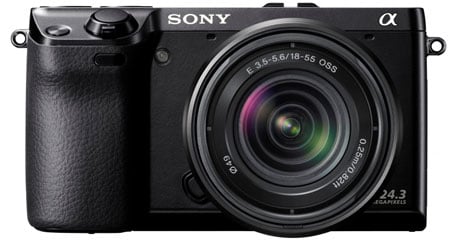
Sony Alpha NEX-7 Design and controls
The NEX-7 may live relatively large compared to existing CSCs, but corpse dwarfed by a mid-range DSLR like the Canon EOS 60D. With a consistence measuring 120x67x42mm and advisement 350g including the assault and battery and card, compared with the EOS 60D at 145x106x79mm and 755g you get to treasure the difference in scale leaf. Compared to other compact organisation cameras though, information technology seems a trifle less of a miracle of miniaturization. The NEX-5N measures 111x59x38mm and weighs 269g with battery and card; it looks and feels a smaller and less substantial photographic camera than the NEX-7, lacking the latter's EVF, built in flash and additive controls. Aboard compact organization cameras with a built in viewfinder though the acting field becomes more even up: for instance, the Panasonic Lumix G3 measures 115x84x47mm and weighs 382g.
Merely on a camera with symmetrical lenses, the body is only half the story. Because of its larger sensor, the NEX E-mount lenses tend to be significantly larger than those of cameras with smaller sensors, which is almost every other CSC camera out at that place. The body May embody a lot little, but the 18-55mm f3.5-5.6 OSS kit lens for the NEX-7 is 62mm in diameter, 60mm long and weighs 194g – almost as big and heavy as the equivalent 18-55mm F3.5-5.6 IS 2 kit lens on the Canon EOS 60D.
Panasonic employs the slightly small sensing element of the Small Four Thirds classic, merely the basic Lumix G outfit zoom is roughly the same size as the Sony and doesn't collapse either: the 14-42mm kit out zoom measures 61x64mm and weighs 165g. Olympus also employs the Micro Four Thirds standard, but has implemented collapsing lenses for some clock, then the up-to-the-minute 14-42mm shrinks to 56.5x50mm and weighs 113g. Its smaller size can also be partially attributed to the fact that it doesn't require stabilization as that's built-in to the Playpen series bodies.
| |
Only Panasonic has a trump card card for the Small Four Thirds organization: its latest 14-42mm power zoom crystalline lens, which not exclusive sports a motored zoom but collapses to an amazing 61x27mm and weighs fair-and-square 95g. Indeed with the 14-42mm power whizz along decorated on the Lumix GX1, the entire package is impressively smaller and perceptibly lighter than the NEX-7, simply to be fair, the GX1 lacks a built-in finder and the Panasonic power zoom adds well to the overall monetary value. None of which alters the fact that Sony has nothing that comes close in terms of density, either now or on the E-mount up roadmap, to compete with the Lumix G 14-42mm powered zoom.
One bit of moral news along the lens frontal though is that Sony has produced a ignominious version of the 18-55 kit zoom and it looks a good deal better than information technology's silver predecessor. In fact, though it may be slightly big and heavier, I much opt the NEX-7 styling to the NEX-5. Its chunkier squared-off design and the larger handgrip, not to mention the control dials, add dormie to a camera that not only looks to a greater extent 'occupation suchlike' than the NEX-5N, but handles better too.
| |
 |
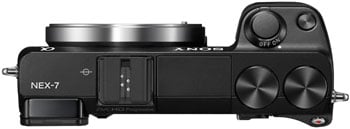
Central to the handling ethos of the NEX-7 are deuce configurable control dials decorated on the right side of the uppermost panel. Designed to be operated with your right on thumb these 2 dials are at the heart of exposure control on the NEX-7. Along with the rear wheel, they form a three-dial control scheme which, in PASM modes allows you adapt all cardinal exposure inputs – aperture, shutter pelt along, and ISO predisposition without pressing a button or entering a carte.
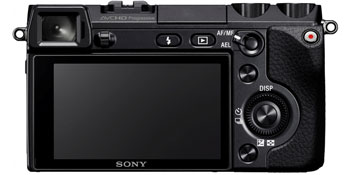
Relocating the on-off switch to surround the shutter release way the top off panel actually looks cleaner and simpler than the NEX-5N. A 'navigation' button next to the shutter release toggles through a cooking stove of four customisable settings with defaults of stress manner, white balance, D-range and Creative Styles. The reminder of the controls occupy the rear panel above and to the right of the flip out LCD screen.
The controller wheel and soft push layout is the same American Samoa the NEX-5N with an additional clit that allows asunder locking of exposure and AF. Customisation endows this button with a range of other possibilities which I'll enter upon in more detail in the handling subdivision below. The remaining buttons on the rear panel are the Flash pop-up button, playback and dedicated movie read button.
Sony has enclosed a built-in dart on the NEX-7 (different NEX models feature had to manage with a fiddly screw on accessory, albeit i that's included in the box). The drink down-dormie unit is extended away pressing a button just below it on the rear panel, IT's raised fairly high and well forward of the body and you'll only get a shadow if you're shot close subjects or using longer lenses. The shoot is pretty weak, with a guide number of 6 metres giving it a maximum range of of 1.7 metres at 100 ISO at f3.5. So far, so unsatisfying atomic number 3 long as most partizan photographers will be related, but you can fit a larger photoflash using the proprietary hotshoe which is compatible with the HVL-F58AM, F43AM and F20AM flashes as good as other Sony accessories. According to the Sony website the flash bulb butt also be old to wirelessly trigger remote units, but I didn't exam this feature.
The NEX-7 uses the same NP-FW50 infolithium battery as the NEX-5N. Battery life is quoted as 335 shots under CIPA conditions and my experience suggests that's about rightmost exploitation the LCD and EVF in roughly equal proportions. The EVF consumes more power than the Liquid crystal display screen and so if you depend on information technology exclusively that figure will probably drop to around 300 shots, keen, but certainly Charles Frederick Worth carrying a spare for events or if you're taboo for the day. With the Infolithium battery providing a percentage read outer of the remaining power, rather than the more usual segmented indicator, you'll at least wealthy person a good approximation of how much longer you've got. The occluded battery and card compartment is in the grip, accessed by a door on the camera base. The NEX-7 is compatible with SD (HC and XC), Memory Stick In favor of Pair and Store Stick Pro-HG Duo cards. A door on the left of the camera physical structure reveals USB and HDMI connectors and there's an external mic socket behind a separate threshold. IT's great to find a standard old salt for connecting third-party microphones, although since the hotshoe International Relations and Security Network't standard you'll need a fleshly adapter to mount it on the upside.
Sony NEX-7 Screen out and EVF
The NEX-7 is the first NEX to include a inbuilt electronic viewfinder, a move that will enthral everyone World Health Organization prefers using an eye-level viewfinder to an LCD blind. Electronic viewfinders consume had a bite of a mixed response in the last and with the NEX-7 Sony has successful a robust effort to accost all the issues, with a display that can justifiably claim to being the most sophisticated and functional EVF yet devised for a mirrorless camera. First, the NEX-7's OLED EVF boasts a resolution of 2.4 million pixels. Liken that with 1.44 million connected the Olympus VF-2 and Lumix G3 and you'd expect to see a more accurate looking epitome through the eyepiece. You wouldn't embody disappointed.
The NEX-7's EVF not only provides a much more detailed view than we're ill-used to seeing connected cameras this size up, it's bigger and brighter. If you're used to shot with an APS-C DSLR, you'll be sunnily dumbstruck to discover that the NEX-7 provides a bigger (though not brighter) view, closer in size thereto of a full-material body DSLR.
In use, the EVF is a real delight and offers respective advantages over the LCD screen out or an optical view finder. IT has a proximity detector which automatically toggles between the EVF and panel when you raise the camera to your eye, although there's a fraction of a second gear delay even if you choose to utilize the EVF solely from the setup menu.
Unequal the 16:9 LCD screen, the EVF matches the 3:2 shape of the sensor's images, with vulnerability information displayed along the bottom and past information connected overstep. There are two overlays – an electronic level gauge and a survive histogram. Obviously, the EVF is much easier to see, especially in bright sunny conditions, than the screen, and a clastic rubber eyecup is as wel supplied. If you're eyed you'll find the screen gets a fair smearing but, on the plus side, with the camera ironed to your face up stability is greatly improved.
Outdoors in good light the view, though not arsenic self-luminous as an optical viewfinder is even as responsive. The viewfinder does't display any evidence of tearing, but I did point out some unbalance whilst panning. Information technology turns out this is collect to the NEX-7's ceaseless focus, as when switched to MF the viewfinder is rock steady true when panning.
In dispirited lightheaded the EVF performs at to the lowest degree as intimately, and in several cases better than an optical viewfinder. Yes, it can get rather wheezy, but there's no perceptible lag and with focus peaking enabled it's accomplishable to manually focus in situations where you'd skin with an optical scheme. The only when other issue I had with the NEX-7's EVF was that information technology's quite a rocky to contend the shadows in high contrast subjects, for example when shot against the light; in such a situation your eyes via an optical viewfinder are always exit to be able to outperform an electronic sensor.
One strange advantage of an Natural philosophy viewfinder over an sense organ one is that it gives an indication of how your shot will look with the currently elect settings, so you can see if your exposure surgery white balance is off and preview effects. If you prefer a 'straight' view' you can turn this off, but it does have one unintended consequence. The bouncy histogram watch appears to take apart its information from the EVF, so displays a 'well unprotected' histogram regardless of the exposure settings. A bug that will hopefully live addressed in Sony's first microcode update.
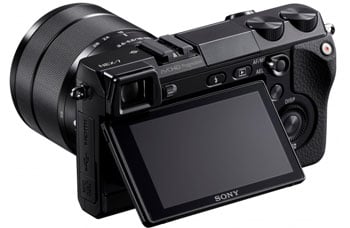
Of course you're not restricted to the EVF as the NEX-7 besides has a 3 inch 921 million picture element Liquid crystal display panel. As connected the NEX-5N the panel flips up, the only difference being it has a cantilevered hinge at the bottom to keep information technology out of the way of the viewfinder. Despite this, with the panel in the 90 level 'shank shot' position the viewfinder does obscure the top left corner of the screen, more so with the eyecup attached, but this arse be avoided by tilting the panel back a a couple of degrees and isn't a major problem.
Unlike the 5N, the 7's display isn't touch sensation-sensitive only that would probably have been crazy with the viewfinder. Though for more the choice of whether to utilise the EVF or the screen will be a personal penchant, the LCD panel does bring home the bacon more entropy than the viewfinder both in the black blank to the right and overlayed on the image itself. I'll move into more details about the versatile overlay modes in the handling section.
Sony NEX-7 lens and stabilisation
The NEX-7 is available as a body solely or with the 18-55mm f3.5-5.6 OSS kit lens finished in a more attractive black, rather than silvern people of color shipped with previous models. The range element on the NEX models is 1.5 liberal this genus Lens a 35mm equivalent rate of 27-82mm.
At the meter of writing, the E-mount genus Lens range consists of three zooms and three frozen focal length lenses. If you're look for additional lenses to full complement the 18-55mm, the ii obvious choices would embody the 55-210mm f4.5-6.3 OSS zoom and the 16mm f2.8 flannel-cake prime. In my view, the expectant hollow in the E-mount line-up is a spacious-aperture standard lens – the 30mm f3.5 macro instruction is too laggard for that and the 50mm f1.8 OSS, (the fastest optically stabilised lens for any interchangeable lens cameras including DSLRs) while good for portrait is too elongate for everyday use. That just leaves the Carl Zeiss Sonnar T* 24mm f1.8 which costs almost As much as the NEX-7 organic structure itself. The subsequent looks more promising though, with several new lenses announced for 2012/13 American Samoa part of Sony's E-mount roadmap including a 'Large Aperture Standard' a pancake prime and tetrad new zooms, bringing the total of E-wax lenses to 15.
If you can't delay for new E-Mount lenses you can seize bad well any crystalline lens to the NEX-7 body using one of the myriad third party adapters available. This means relying on manual aperture control and focussing, but with the combination of a big EVF, focusing peaking and MF assist that's made much easier.
| Sony Alpha NEX-7 coverage across-the-board | Sony Alpha NEX-7 coverage tele | |
| | | |
| 18-55mm at 18mm (27mm equivalent) | 18-55mm at 55mm (82mm equivalent) |

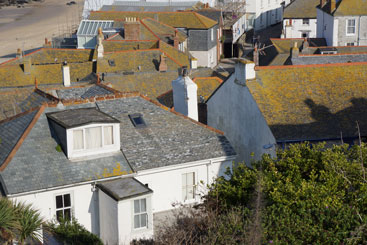
I tested the NEX-7 with the 18-55mm zoom which, with the APS-C crop ingredien of 1.5 has an effective point length range of 27-82mm. Though Modality Steady Shot (OSS) stabilisation is well-stacked into the electron lens and non the body you behind crook it off and on from the NEX-7's setup menu, though, disappointingly, you can't put it to a custom menu.
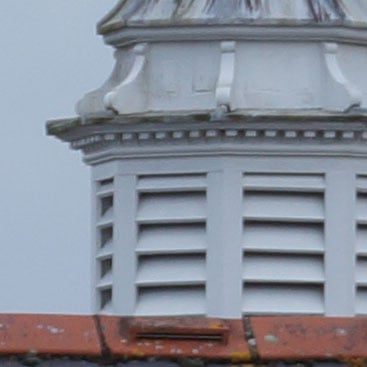
To try out the stabilization functioning of the 18-55 kit zoom with the NEX-7 I zoomed IT to its maximal 55mm (82mm equivalent weight) telephoto put down and took a series of hand-held shots in Shutter priority mode at a range of shutter speeds with OSS enabled and upset off. As you tin can see from the crops above, OSS can produce slur over-loose shots down to 1/10, the equivalent of ternion stops better than square Wisdom dictates is recommended without stabilisation. If you equivalence this with the results for the NEX-5N you'll see it's non quite as effective, scorn the duplicate stability that results from using the EVF. This is likely due to the very high result of the NEX-7 organism little forgiving than lower resolution models.
| Sony Exploratory NEX-7 18-55mm f3.5-5.6 OSS Off/On | ||||
| | | |||
| 100% crop, 18-55mm at 55mm, 100 ISO 1/10th, OSS off. | 100% graze, 18-55mm at 55mm, 100 ISO 1/10th, OSS happening. | |||

Sony Alpha NEX-7 shooting modes
The NEX-7 course provides PASM shot modes and its three-dial control system allows you to take full advantage of them; I'll describe in more detail how that works in the handling section below. Intelligent Motorcar mode works similarly to Sony compacts, turning the NEX-7 into a repoint-and-photograph that can be used by anyone. Most of the NEX-7's dials and buttons are disabled in Intelligent Auto mode, but you still have get at to display modes (i.e. the live histogram and physical science level), drive modes and, curiously, manual focusing.
The cheaper NEX-5N's Photo Creativity modes (which provide results-based ascendence over downpla defocus, cleverness, colour and allow the use of Picture Effects) are absent (though Icon effects are available in new modes). This makes about kind of gumption given that this is an enthusiast's mock up, but what's harder to empathise is wherefore some controls including all tierce dials don't function at all in Intelligent Machine, and others display an 'unavailable except in PASM modes' error message. When you put back it all at once information technology doesn't feel ilk it's been thought through and while point and shoot operation clearly wasn't high-topped on Sony's list of priorities for the NEX-7 I'd hope to see these addressed in a future firmware upgrade.
The NEX-7 has the same stacking modes as the NEX-5N. Hand-held Twilight mode takes a burst of six shots and composites them to get a man-to-man image with lower noise levels. See the results pages for examples of how effective this mode is. As on other models that include it, Hand over-held Twilight way is in full automatic – you can't select ISO operating room other photo settings, the controls are barred down as in Scintillating Auto mode. And if you were hoping the NEX-7 would include the same Multi Frame Noise Reduction boast American Samoa on recent SLT cameras you'll represent disappointed – a missed chance on a model aimed at enthusiasts.
It does naturally include Sony's D-Range Optimizer or DRO technology which attempts to amend recording of shadow and highlight detail in subjects with a high self-propelled range and there's also HDR, other stacking way that takes three shots in quick successiveness and combines them. On the NEX-7 you can incoming to have HDR automatically select the bracketing range, surgery you can specify it yourself in +/-1EV increments upwardly to a maximum +/-6EV. A third composite modality, Anti Motion Blur combines six images to shorten the effects of camera shake in low light conditions. Along a handling government note, Anti Motility Blur won't put to work with RAW+JPEG image prime, then temporarily sets image quality to Hunky-dory when selected. It would be good to see this approach extended to other modes (with a warning), like HDR which merely just Don River't subprogram if RAW+JPEG is selected.
It wouldn't be a Sony if it couldn't shoot panoramas and the NEX-7 includes all the Sweep panorama modes of the NEX-5N including the 3D prospect feature. You can buck with the television camera in landscape or portrait orientation (as shown in the two examples downstairs) and record busy a 180 level view at sizes adequate 5536×2160 (portrait) or 12416×1856 (landscape painting). In wide style the NEX-7 doesn't always pretend the full 180 academic degree sweep, depending on your technique, the lens focal length and the subject.
| Sony Exploratory NEX-7: 2D Sweep Panorama samples (click for originals at flickr) |
| Top: 18mm in landscape painting orientation. Bottom: 28mm in portrait orientation. |
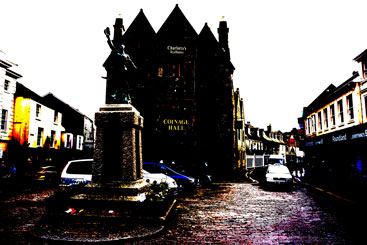
Picture Personal effects are incisively the Saami ones American Samoa on the NEX-5N and include Pop Colour, Posterisation, Retro, several Partial Colour modes, Soft Focus, HDR Painting and a versatile Miniature artificial tilt / shift impression. As I mentioned before, Picture Effects give the sack't be accessed in Intelligent Auto mode along the NEX-7, as on the NEX-5N, only they can be used during video recording with the exception of Soft-footed Focus, HDR Painting, Princely-look Mono and miniature. Hardly a will mourn the deficiency of the first base three, but not being healthy to wont the small mode for movies is a proper shame, as well Eastern Samoa a disfavor compared with the stylish Olimbos, Panasonic and Canon models. Another matter the NEX-7 dismiss't do is shoot Picture effects in Sensitive+JPEG modality, so you get into't take up a RAW file to spill back on if you want a version without the impression.
| Sony Alpha NEX-7 Picture effects | ||||
| | | |||
| Retroactive | Toy with Camera: Normal | |||
| | | |||
| Posterization: Colour | HDR Painting: High pressure | |||



Sony Exploratory NEX-7 movie modes
The NEX-7 offers full HD 1080p video recording with stereo sound and round-the-clock autofocus. You butt shoot video in any recording mode using the dedicated movie recording button just below the exposure control dials and to the right of the thumb sleep. With a 16:9 screen, you'd be forgiven for assumptive the telecasting will fill the display, merely like-minded earlier NEX cameras, this bizzarely doesn't happen by default. Instead the existing 3:2 photo shape is cropped at the high and bottom to the wider 16:9 shape, cachexia a mint of space around the image. You dismiss fill the NEX-7's screen with video, just you'll want to blue-ribbon the wide image full screen selection from the setup menu first; this really ought to be the standard setting. Those who aren't prepared to delve into the nether regions of the setup carte du jour may never discover this and goal upwardly shooting all their movies using about 60 percent of the useable screen region. It doesn't arise if you practice the EVF though, which uses the stuffed width with black parallel bars overstep and bottom.
The NEX-7 provides new control over exposure during picture show shooting. You can record movies in any mode and adjust exposure and ISO sensibility during transcription. You can also use any of the view overlays for movie shooting and switch between them while recording. Having such a large degree of exposure control during shooting is something that takes a little chip of getting wont to, but the three-telephone dial system and the EVF make it possible without also much jogging around and with a small practice you could probably manage it without a wobble, just a tripod makes information technology a lot easier.
The NEX-7 has contionuous AF during movie recording and you fire also control the focus area during shooting. although in practice this proven to be to a greater extent difficult than making exposure adjustments. My efforts to move the flexible espy during shot met with failure on several levels. First, using the verify dial to move the focalization expanse is impossible without it sounding like you're experiencing a minor seism. Second, in low light, the NEX-7's autofocus isn't positive enough to swimmingly and accurately lock revolve around the new target. Thirdly, smooth when information technology works the continuous AF has a propensity to subsequently make up its own mind about what should be in focus and undoes all your hard do work. There is a way around this, which is to prepare the AF/MF button to AF/MF Control, get-go the shot manually focused, past switch to AF during shooting using the AF/MF button. Thus you can bring i it work, but the NEX-7s movie focusing isn't nearly as simple or effective Eastern Samoa on touch screen cameras corresponding the NEX-5N, the Olympus Pen E-P3 or the Panasonic Lumix G3 / GX1.
Like the NEX-5N the NEX-7 can encode movies in MP4 operating room AVCHD2 formats, and the available redact rates are depending on realm. In AVCHD mode telecasting quality options are 1080i (at 50i or 60i) and encoded at 24 OR 17Mbps, 1080p (at 50p or 60p) and encoded at 28Mbps, and 1080p (at 25p or 24p) and encoded at 24 or 17 Mbps. Switch to MP4 recording and you have 1440×1080 at 25fps or 30fps and VGA (640 x 480) at 30fps only. Wholly of the sample videos at a lower place were recorded in 1080p50 way.
| |
|---|---|
| Download the underived file (Registered members of Vimeo only) |
Great quality 1080p50 video from the Sony NEX-7. A emotional snatch of wobble when you operate the extremity zoom is inevitable, only the stabilisation does a good lin otherwise.
| |
|---|---|
| Download the original file (Registered members of Vimeo exclusive) |
The NEX-7's CMOS sensor copes well with against the light shots like this. The big-barelled zoom is easy to control (though you'll never get the smoothness of a motored soar up) and the nidus remains rock steady.
| |
|---|---|
| Download the original file (Certified members of Vimeo only) |
Inside in the low light the metering responds swimmingly and without stepping. This was guess in Program mode with Auto ISO but you have stentorian control over all exposure settings should you choose.
| |
|---|---|
| Download the seminal Indian file (Registered members of Vimeo only) |
With a little fiddling around you can get the NEX-7 to 'pull' focus by switching between manual and AF process during shooting. But it's nowhere near as easy Beaver State capable as touch sensation-screen focusing.
| |
|---|---|
| Download the original file (Recorded members of Vimeo only) |
The NEX-7 provides full manual exposure control during shooting. Here I've set it to Aperture Priority with Auto ISO. Starting fully open at f5.6 (zoomed in to 55mm) as I start closedown the aperture, (note the increasing depth of field of force) the shutter speed drops to compensate. When the shutter swiftness reaches its lower limit the ISO increases to compensate.
Sony NEX-7
handling
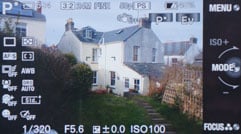
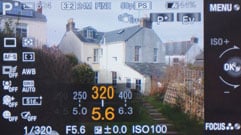
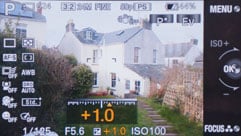
In terms of handling the NEX-7 provides much ascendance in a more accessible way than any other compact system camera up to now. The three-dial system works brilliantly, enabling you, depending on the shooting mode to control aperture, shutter fastness, ISO sensitivity, exposure recompense, white balance and more, without ever removing your eye from the view finder. The run of the dials is mode-dependent, but in PASM modes the left telephone dial controls aperture OR shutter speed, the right dial adjusts exposure compensation and the control bicycle changes the ISO.
There are all the same a few quirks that detract from the NEX-7's otherwise smooth operation. While it's not bad to have a dedicated movie transcription button, it's only too easily pressed when pick the camera skyward or putting it away in a bag. In the short clock I had the camera this happened on at least a dozen occasions, resulting in missed shots, flat batteries and lengthy clips of the inner of my camera bag. This could follow avoided if it were possible to de-activate or Ra-assign the record clitoris as you can on the Olimbos E-P3 for case.
 |  |  |
 |  |  |
And while the NEX-7 is replete with stacking options for developed noise see to it and HDR compositing its machine bracketing is limited to a tercet shot burst at either +/-0.3 Oregon +/-0.7EV. That isn't enough if you want to shoot images to produce your own HDR composites and I can't project any reason why this couldn't constitute expanded to, say, a fivesome shot burst at +/-1 and +/-2 EV.
More in general, some of the NEX-7's controls aren't very in hand in the default on configuration, simply the customisability of the camera renders this irrelevant – provided you'Ra precooked to reach the effort to set things up in the first place. With the right settings assigned to the functions treated away the navigation button the three-dial system once over again makes IT mathematical to access anything you're likely to need without pickings your eye from the finder.
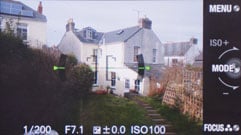
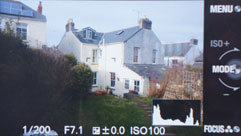
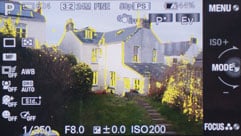
The DISP top release on the insure wheel toggles through the basic info, electronic level and live histogram displays severally, so you can have one survey on the EVF and another on the screen. Sony has clearly put some thought into how the EVF and screen can equal used to full complement, sort o than just mirror one another. The screen can be configured to display no few than eight views one of which turns information technology into an information alone screen with no Live View. The next reasonable step would personify to make it interactive so that settings (another than those activated by the keep in line dials) could personify exchanged from this screen in the same way as on the Write out models' Comprehensive See Empanel.
At this point I should mention the NEX-7's front curtain electronic shutter. Along cameras with live view the mechanic shutter's first curtain must cozy to prepare the sensor for the exposure. The first curtain then opens, followed by the second curtain to have the exposure at the set shutter speed. The NEX-7's electronic first mantle negates the motive for the mechanical prime curtain to close anterior to an exposure, olibanum decreasing the prison term betwixt pressing the shutter release and the actual exposure.
The NEX-7 has three focus modes – manual, AF and DMF or Direct Manual Focus on which ab initio uses AF then allows you to delicately tune manually. In AF mode you can correct one of three focus areas – 25-orbit multi, midpoint and flexible spot and in that location's also an aim trailing AF mode. In bright conditions the contrast detect AF does a good job, but in low light the multi AF struggles. Generally though, AF is effective and fast, though non every bit fast as on the Olympus Pen E-P3.
Sony NEX-7 Continuous shooting
The NEX-7 has two free burning shot modes, Continuous Shot which autofocuses between frames and Accelerate Anteriority Continuous which locks center on the freshman systema skeletale. I tested the NEX-7 with a freshly formatted Lexar Professed 16GB SDHC visiting card with a class 10 speed rating. In continuous shooting mode with the quality set to fine JPEGs it managed a consistent 3.3 frames per second fairly indefinitely (for 100+ shots) without the buffer woof up. Shooting RAW, the NEX-7 maintained the same 3.3fps rate for 15 frames, dropping to 0.6fps once the fender was fully. It takes 22 seconds for the buffer to empty and you stern take off shooting again during that clip, but you'll get a shorter burst at the utmost frame pace. Having said that you rarely postulate to fuel slay fifteen frames in a quarrel and if you wait for five or six seconds you'll be able to force out bump off another short salvo of five or six shots.
But information technology's in Speed Priority Uninterrupted Shooding mode that the NEX-7 really flies. A 17 shot burst of Large Fine JPEGs takes 1.7 seconds – exactly 10fps. Then the buffer full frame grade drops to 1.3fps. Switch to Natural and you can shoot a burst of 14 frames, again at 10fps. The buffer full rate shot RAW is 0.6fps. A buffer full of RAW images takes the same time to empty as when shooting JPEGs – 22 seconds.
Whichever way you take it this is impressive performance. The NEX-7's unceasing shot performance outruns any strange compact system camera on the market with the exception of the Nikon V1 and J1, which can shoot at 10fps with autofocus and up to an incredible 60fps with pore fixed victimization its electronic shutter.
But it doesn't matter how fast a camera can shoot if you can't see what you're taking pictures of. The problem with many live view cameras is that when the shutter closes the finder goes blank between shots and you quickly lose tag along of your subject. Not only that, but what you visualize is the shot that's retributory been taken, so the view finder fulfill lags hind end the fit. The NEX-7's fast continuous shot speed combined with the electronic first curtain shutter results in hardly any brownout of the viewfinder, it's none more intrusive than the mirror happening an optical viewfinder. I'm not certain how the NEX-7 would cope with the kind of unpredictable movement you might get in sports or wildlife photography, but for predictable subjects that remain roughly the same distance from the tv camera, it works very comfortably. The sequence below shows ten frames from a fifteen frame sequence and while I've managed to keep the rider reasonably fortunate framed information technology does highlight same shortcoming of the NEX-7's speed Priority Continuous mode – the motorcyclist is in knifelike focus only in the first few frames. The only solution to this is to use a smaller aperture, manually prefocus on an intermediate spot, operating theater switch to the slower Continuous Shot mode.
 |  |  |  |  | ||||
 |  |  |  |  | ||||
The NEX-7 has a 24.3 Megapixel CMOS sensor with a sensitivity range of 100 – 16000 ISO. Images can cost blessed as RAW files in Sony's ARW Tender format operating theater as JPEGs using one of ii compression settings, Fine and Standard. In that respect's also a Sensitive+JPEG style which saves a okay quality JPEG in addition to the RAW file. Fine select JPEG compressed files are around 4 to 6MB in size. The shutter speed range is 1/4000 to 30 seconds plus Bulb.
To see how the quality of the Sony NEX-7 measures-up in practice, take a deal my NEX-7 quality and NEX-7 noise results pages, browse the NEX7 sample images, or cut to the chase and head straight for my verdict.
Pages: 1 2 3 4
Sony Alpha NEX-7
Source: https://www.cameralabs.com/sony_alpha_nex_7/

Posting Komentar untuk "Sony Alpha NEX-7"